We stopped in the Helper/Price area of Utah in order to drive through the Nine Mile Canyon petroglyph "outdoor museum" It contains some of the best preserved examples of Native American petroglyphs starting with the Fremont people in 950 A.D. through more "modern" peoples of the 1600's. There were initials from the Buffalo Soldiers who built the road, and early settlers. I had read about in friend's blogs and it's been on my list for quite awhile.
Since we had two days, we took yesterday morning to just relax and enjoy our pretty site and then spent the afternoon just getting to know the area a little.
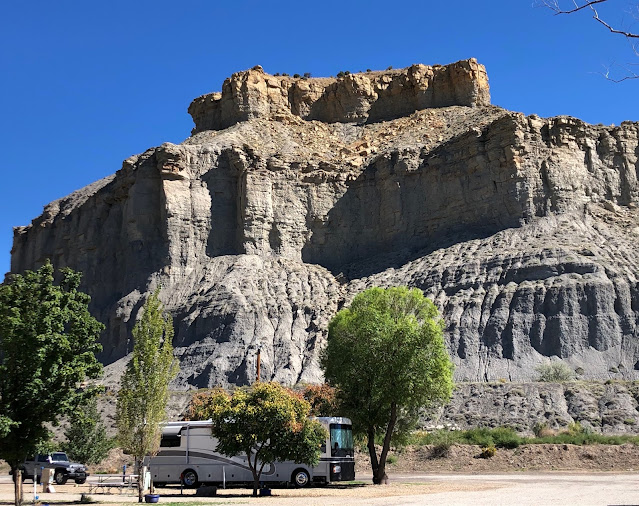 |
| our sweet spot in tiny Blue Cut RV (12/23) |
One of our favorite things to do is just turn off the pavement and follow an interesting looking dirt road to see where it goes. Yesterday afternoon we did just that and had a very pleasant afternoon.
Evidently there had been a pretty good rainstorm here in the last few days and there was plenty of mud in the usually dry stream beds.
Today we got an earlier start, packed a lunch and headed towards Wellington and the turn off for the Nine Mile Canyon. The Canyon drive is actually more like 50 miles long, further if you continue past the end of pavement, but by the time we got to that point we were both on extreme overload. Our necks were stiff from craning them to scan the sandstone cliffs, our eyes were tired from looking and looking for images. Is that a drawing - or is that just a lichen pattern? Some of the pictographs were close to the road, easy to see and some were high above, binoculars needed high. Some were extremely clear and some were very faded. Our minds were numb from seeing people, and animals, and symbols carved into or painted on the sandstone by people over 1000 years ago. What were they saying, what were they seeing all that time ago?


The owner of our campground gave me a very rudimentary, barely readable mile marker guide to help us locate some of hundreds of prehistoric petroglyphs and pictographs. She also gave me her own, personal take on the meaning of some of these strange representations. While archeologists and historians don't really know the exact meaning of them, she felt strongly that they were pictures of aliens and their crafts as they encountered native animals, snakes, big horn sheep, etc. She showed me (on her phone) several examples and shared her rational. Interesting.
We just marveled at them for what they were, windows into the past.
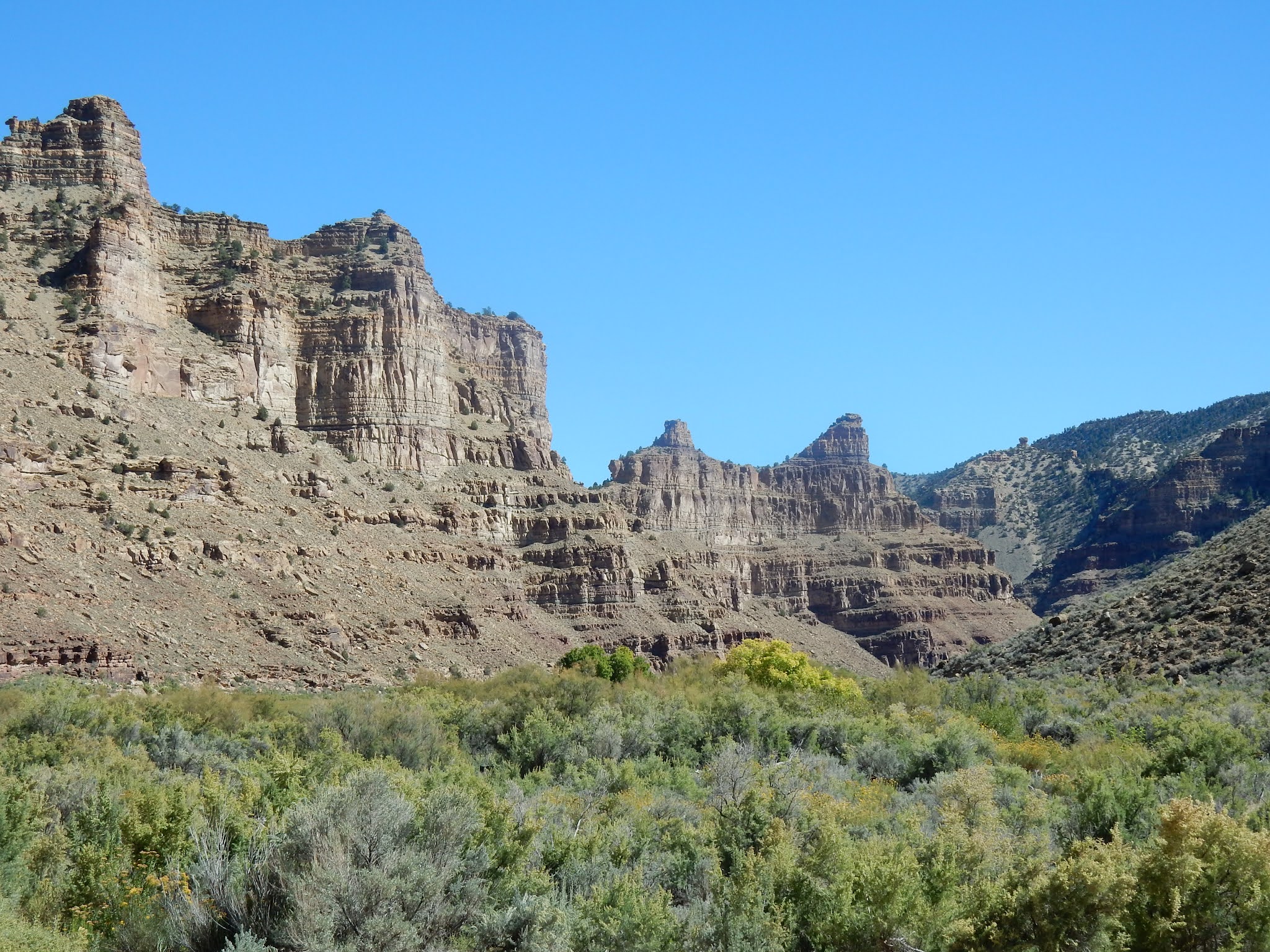
The scenery was astonishing also. We swiveled back and forth between rock art and the soaring, layered walls of the canyon. Added to the mix was the fact that most of the way was free range and we needed to be mindful of large, black roadblocks when we were driving and gushy cowpies when we were bushwhacking and not necessarily looking where we were putting our feet.
Our last panel was called The Great Hunt. It is said to be a representation of a real Big Horn Sheep hunt.
As we were walking to this panel we saw the results of a very recent flood event. Debris was jammed into all the fences and there was a build up of mud that almost covered a stone bench in front of The Great Hunt. We were very very glad we hadn't started up the canyon in the rain.......
It's been a wonderful two day stay here, we're so glad we stopped at this out of the way spot. We're on our way tomorrow, next, a quick stop in Monticello, Utah.
Here is totally unrelated picture for Gramma Pamma. Lewis performs his patented licky lick procedure on baking dish before it gets officially washed.